
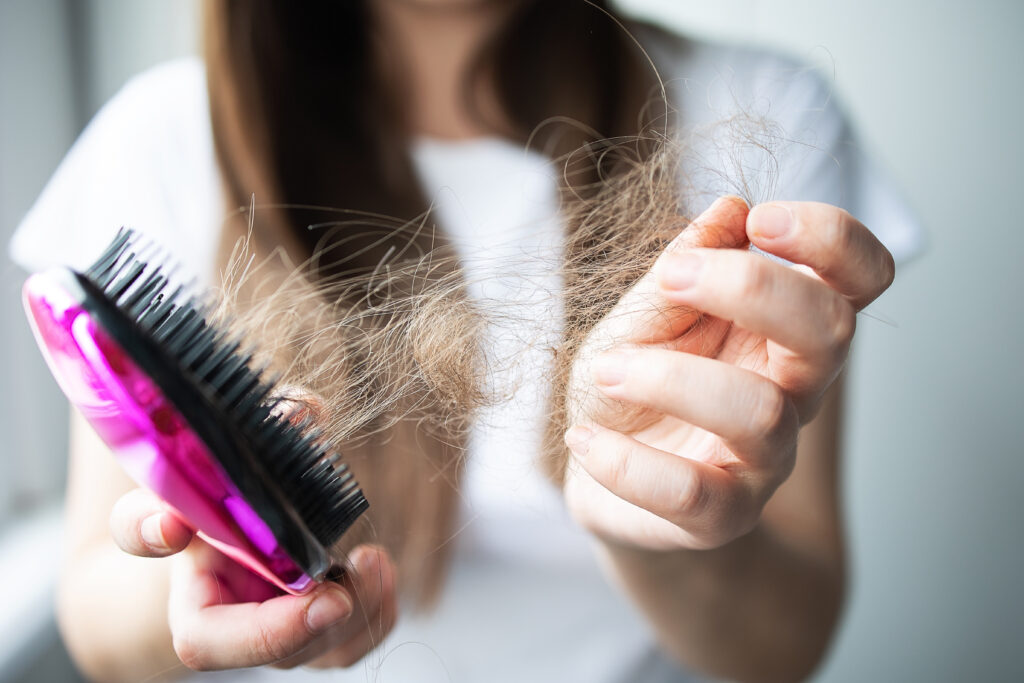
Noticing more hair in your brush, shower drain, or on your pillow can be unsettling. But some daily hair shedding is completely normal. The question is: how much shedding is expected, and when could it be a sign of something more?
Is Hair Shedding Normal?
Yes. It is normal to lose about 50 to 100 hairs per day as part of the natural hair growth cycle. Your hair is constantly growing, resting, shedding, and replacing itself. This type of routine shedding is not the same as true hair loss.
However, when the amount of shedding noticeably increases, or when hair starts to look thinner overall, it may be time to take a closer look.
Hair Shedding vs. Hair Loss: What’s the Difference?
Hair shedding usually means more hairs are falling out than usual, but the hair follicles are still active. This can happen temporarily after a physical or emotional stressor.
Hair loss, on the other hand, may involve:
- Gradual thinning
- Bald patches
- A widening part
- A receding hairline
- Areas where hair is not growing back
Understanding the difference matters because different causes require different treatment approaches.
Common Causes of Excessive Hair Shedding
One of the most common causes of sudden increased shedding is telogen effluvium, a temporary condition that can occur after the body experiences stress or change.
This type of shedding may happen after:
- Significant emotional stress
- Childbirth
- Illness or infection
- Surgery
- Rapid weight loss
- Nutritional changes
- Medication changes
- Hormonal changes
- Thyroid issues or low iron levels
With telogen effluvium, shedding often begins a few months after the trigger, which can make it difficult to connect the hair changes to the original cause. The good news is that this type of shedding often improves once the underlying trigger resolves.
When Should You Be Concerned?
You should consider scheduling a Dermatology evaluation if you notice:
- Sudden or significant shedding
- Hair coming out in clumps
- Visible thinning
- Bald patches
- Scalp itching, pain, redness, or flaking
- A widening part or receding hairline
- Shedding that continues for several months
- Hair loss after starting a new medication
- Hair loss along with fatigue, weight changes, or other symptoms
A Dermatology provider can help determine whether your hair shedding is temporary or whether another condition may be contributing.
What Happens During a Hair Loss Evaluation?
During a Dermatology visit, your provider may ask about:
- When the shedding started
- Recent stress, illness, pregnancy, surgery, or weight changes
- Medications or supplements
- Family history of hair loss
- Hair care habits and styling routines
- Scalp symptoms
Depending on your symptoms, your provider may also examine the scalp, perform a gentle hair pull test, or recommend lab work to check for possible contributing factors such as thyroid changes or low iron. Bloodwork is sometimes used to rule out underlying causes when appropriate.
What Can Help?
Treatment depends on the cause. In some cases, reassurance and monitoring may be enough. In others, your provider may recommend changes to your hair care routine, treatment for scalp inflammation, correction of nutritional deficiencies, or medical therapy for hair thinning.
In the meantime, it may help to:
- Avoid tight hairstyles that pull on the scalp
- Limit heat styling and harsh chemical treatments
- Use gentle hair care products
- Avoid aggressive brushing or towel drying
- Maintain a balanced diet
- Seek care for scalp itching, flaking, or irritation
Get Answers About Hair Shedding
Hair shedding can be stressful, but you do not have to guess what is causing it. A Dermatology evaluation can help identify whether your shedding is temporary, related to an underlying condition, or part of a more chronic hair loss pattern.
For hair shedding, scalp concerns, acne, rashes, skin checks, and other Dermatology needs, book your appointment today with a specialist at Advanced Specialty Care.
ADVANCED SPECIALTY CARE
Advanced Specialty Care’s Dermatology practice is welcoming and patient-centered, specializing in all of your family’s skincare needs from head-to-toe. Our board-certified Dermatology specialists excel in general medical, surgical and cosmetic dermatology for patients of all ages, with expertise which allows them to not only diagnose and treat complex skin conditions, but also improve the appearance and condition of the skin.
Call (203) 830-4700 to schedule an appointment with one of our Dermatology specialists.